
My Boss Wants Me to Find B2B Leads on LinkedIn
Last month, I got a message from a comms person at a boutique consulting firm in the US.
The message was short, but I could sense the stress behind it.
“My boss wants me to find clients on LinkedIn.”
I’ve heard versions of this from comms leads, admins, intake coordinators, office managers, and the person who is simply “wearing the marketing hat” because someone has to.
If that’s you, I get it. I’ve been there!
You’re expected to deliver results without having a clear system to follow.
It’s frustrating, but let’s go over how you can start getting leads on LinkedIn.
Here are two quick wins you can try today to get LinkedIn leads, even if you don’t have a budget.
Before we get into frameworks, I want to give you two actions you can take immediately if you are the one wearing the marketing hat.
#1 Pick five.
Find five prospects who fit your ideal client profile and reach out to them in a genuine, personal way.50.
Not 500.
Five.
This helps you stay focused and quickly notice if something isn’t working in your messaging.
#2 Tack it somewhere simple.
Keep a simple spreadsheet with columns for name, date contacted, channel, status, next step, and follow-up date. It’s basic, but it keeps leads from getting lost or forgotten.
These two steps won’t fix everything, but they’ll give you enough progress to avoid feeling overwhelmed. That’s important.
What the “marketing hat” problem actually is
Here’s what’s actually happening inside most $300k to $2M boutique professional service firms and B2B SaaS companies.
Without a dedicated marketing person, whoever handles marketing ends up becoming the whole system by default.
They post when they have time, respond when they remember, and follow up whenever their schedule allows.
Then leadership looks up and says, “LinkedIn is inconsistent.”
But the real problem is that the process itself is inconsistent.
High-ticket service businesses like law, therapy, coaching, consulting, clinics, or advisory firms can’t rely on just posting and hoping for results.
To stay consistent on LinkedIn, try using a simple daily checklist:
dedicate 15 minutes at the start of each day to prospect identification and LinkedIn check-ins
allocate set times for responding to messages
and set aside a short time block each day for follow-up on any ongoing conversations.
This routine helps you stay consistent, even if you have limited resources.
If you want to book calls regularly, you need to follow a consistent process. That’s what matters most.
Define “qualified” before you chase volume
Before you open Sales Navigator, write another post, or send another DM, define what “qualified” looks like in your business.
Most teams skip this step, which is why they end up attracting people who waste time, want free advice, or can’t afford their services.
For most high-trust, high-ticket firms, “qualified” looks like this:
They have a problem you solve, and they can say it clearly
They have a budget aligned with your engagement range
They have urgency (30–90 days, not “someday”)
They are the decision-makers, or have direct access to them
They want a structured process, not free advice
If you don’t define what qualified means, you’ll attract all kinds of people.
And that includes people who aren’t a good fit, aren’t ready, or aren’t serious. This isn’t about getting more leads—it’s about filtering the right ones.
Once you know what qualified looks like, LinkedIn becomes much easier to use.

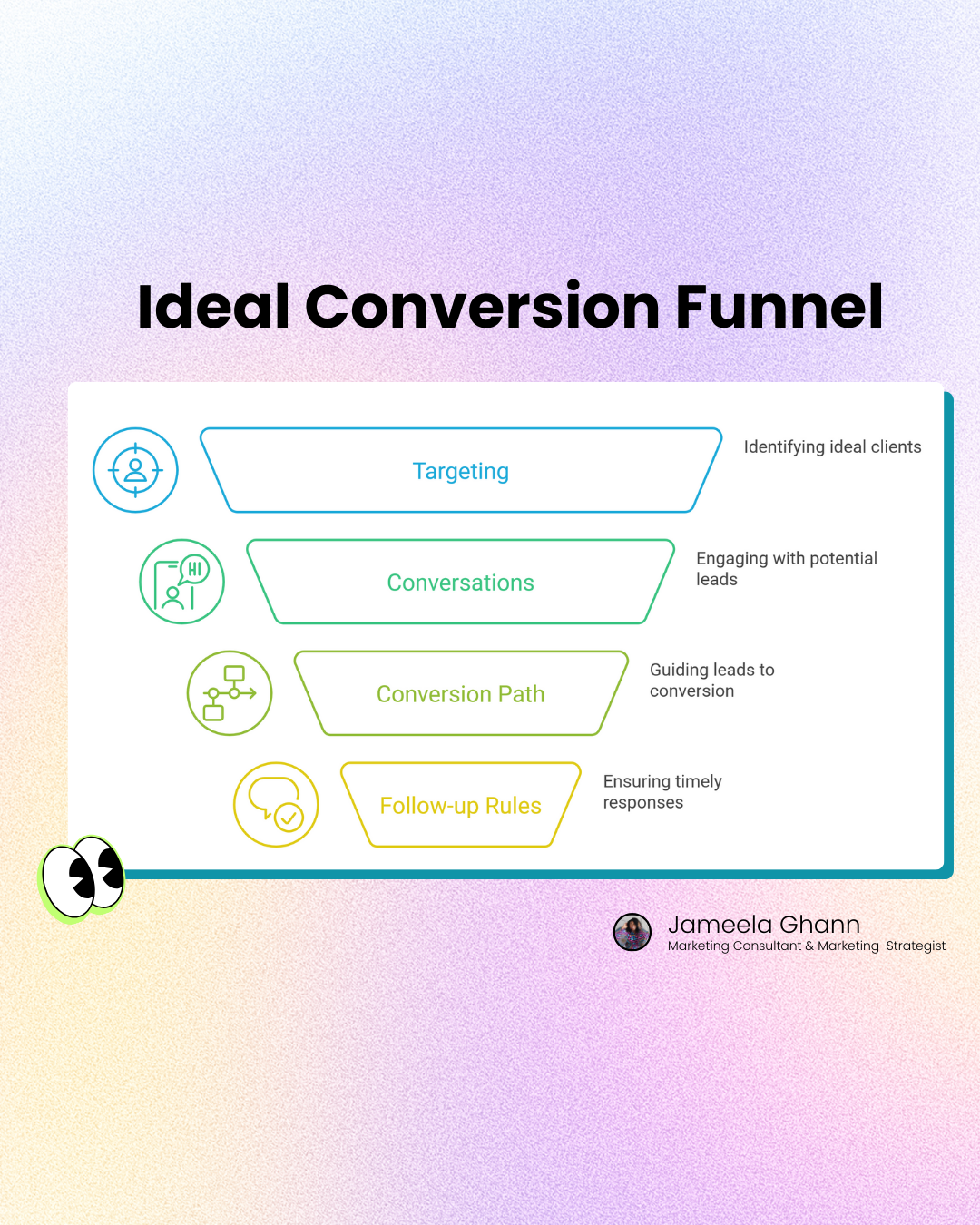
The 4-part LinkedIn lead system your team can actually run
This is the system I set up for teams when the marketing coordinator, comms lead, admin, intake coordinator, or office manager is handling marketing.
This is not a CRM. It’s not a tool stack.
It's the minimum structure that prevents leads from falling through the cracks and stops the person wearing the marketing hat from becoming the fall guy (or gal..or person)!
1) Targeting
If your ideal client profile is just “business owners,” your leads will be all over the place.
Pick one real buyer you can describe in a sentence.
Example: “A 10-person clinic owner in Ontario who needs consistent booked consults without hiring a marketing manager.”
If you use Sales Navigator, use it for what it’s good at, which is targeting and building a living list you can work through consistently.
The goal is not to have more people in the pipeline. The goal is, and always will be, having “the right people.”
2) Conversations
You don’t need 50 scripts.
You just need one simple conversation flow that feels natural, like a real conversation. Here’s what I suggest:
Comment like a human
Connect with context
Ask one question that screens for fit
Move to the next step only when a person qualifies
3) Conversion path
Your conversion path should be straightforward.
Simple works best.
Post → landing page → application → invited to book (if qualified)
If you don’t have this, the person handling marketing ends up explaining things one by one in DMs for every inquiry.
That’s when follow-up gets messy, lead quality drops, and people start saying LinkedIn is unpredictable.
4) Follow-up rules
This step protects both your team and your time.
Every lead needs:
an owner
a next step
a response-time expectation
If your firm can’t respond within a day, it will seem like LinkedIn isn’t working, even if your marketing person is working hard.
A simple fix is to set a rule: “All LinkedIn inquiries get a response within 24 hours.” Even a quick reply helps keep things moving.
Organic vs ads: when to use each
Lots of people will ask me if they should run LinkedIn ads.
I always say organic is where you test things. It lets you try out messaging, start conversations, and get early applications.
Ads are for after the path already works.
If you run ads without clear qualification and follow-up rules, you’ll waste your budget.
What to track so the person wearing the marketing hat can prove ROI
If you want to know if LinkedIn is working, you need a weekly scorecard.
A simple scorecard is better than relying on opinions or gut feelings. Here’s what you can track:
Applications
Qualified applications
Booked calls
Show rate
Closed deals (or sales-qualified next steps)
This way, the marketing coordinator or intake lead can come to meetings with real results, not just opinions.
A real example (anonymized)
A boutique consulting firm in the US with eight staff came to me with a familiar problem: they did great work, but referrals were slowing down and their LinkedIn engagement was inconsistent.
Their marketing coordinator posted two or three times a week and followed up only when possible.
We installed:
a clear, qualified definition
a post → page → application path
follow-up ownership and a 24-hour response rule
a weekly KPI scorecard
In just six weeks, they increased from three to five booked calls per month to eleven, and their show rate improved from spotty to about 85%.
It was the same team and the same person handling marketing.
The only difference was the system they used.
That’s why I built the Beyond Referrals LinkedIn Engine
If you’re tired of patching things together and calling it marketing, this is the solution.
The Beyond Referrals LinkedIn Engine is an 8-week implementation cohort where we install the whole LinkedIn-to-booked-call system with your team:
clear positioning and offer angles
a simple conversion path (landing page to application)
application routing that sends qualified people to book
a weekly LinkedIn content cadence that drives action
lead handling and follow-up workflows (CRM optional)
UTMs + a weekly dashboard tied to booked calls
LinkedIn ads readiness (you build, we review before launch)
Implementation specifics:
2–4 hours per week for the person implementing marketing
weekly 90-minute live build session
weekly office hours for blockers
templates, scripts, checklists, examples
structured feedback on submissions
If you want LinkedIn to consistently bring in booked calls, you need this system in place.
Apply to the Beyond Referrals LinkedIn Engine
If you're a boutique professional service firms in the US/Canada that want this installed end-to-end in 8 weeks, apply today!
Further resources (if you want to go deeper)
If you want predictable leads beyond referrals:
Referrals Aren’t a Growth Plan: Here’s What a Real Lead Engine Looks LikeIf you want your LinkedIn to attract the right people (not everyone):
Your LinkedIn Isn't Working Because Your Offer Sounds Like Everyone Else'sIf you want to stop “nice chats” and start getting qualified calls:
Stop Booking The Wrong Calls by Implementing an Application-First FunnelIf you want your website to do the pre-qualifying for you:
Does Your Website Match Your Caliber? A Guide to Pre-Qualifying High-Ticket Clients Without Feeling SalesyWant a quick check on what’s breaking in your system right now?

