
Every Reason You Haven't Started on LinkedIn Yet, Addressed Honestly
I've had a lot of conversations with boutique firm owners who genuinely want to build a LinkedIn lead system.
They get the logic. They can picture what consistent booked calls would mean for their firm. And then they don't apply.
Not because they're not serious. Because something is sitting in the way and they haven't said it out loud yet. A concern that feels too practical to ignore, a past experience that left them skeptical, or a constraint that feels like it has to be solved before anything else can happen.
I've heard most of them at this point. So I want to address them one by one, in plain language, so you can figure out whether the thing in your way is a real blocker or just a story that's been running in the background unchallenged.
Reason #1: We don't have enough time.
This is the most common one and it deserves a real answer instead of a dismissive "you'll make time for what matters."
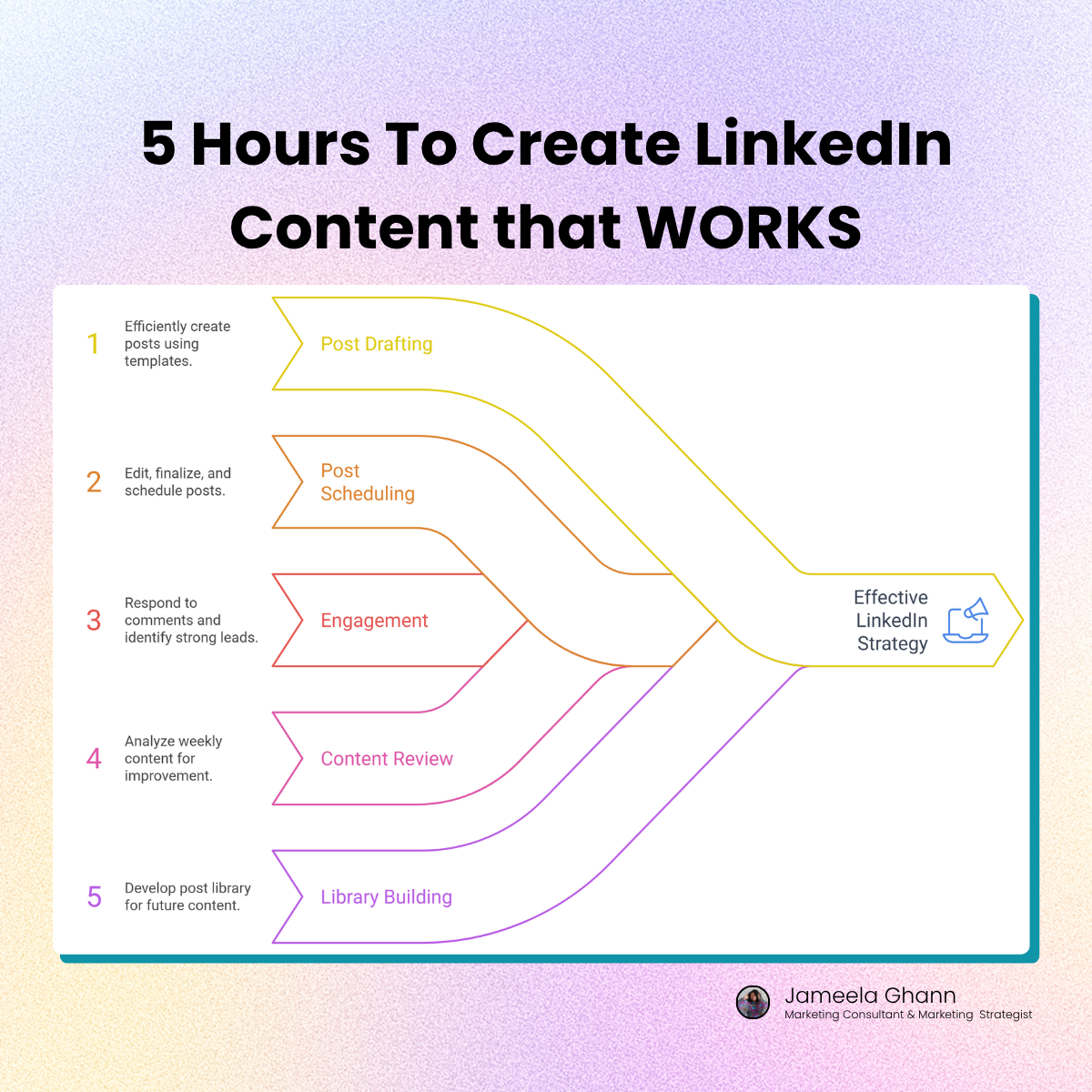
The Beyond Referrals LinkedIn Engine is structured to allow a maximum of 5 hours per week, and most of it is owned by your operator, not you (the owner).
Here's what that actually looks like in practice.
One hour to outline and draft three posts using templates you've already built together.
One hour to edit, finalize, and schedule.
One hour to review comments, reply to relevant prospects, and flag strong leads for follow-up.
One hour for the weekly content review session.
One hour to build out the post library for the coming week.
Five hours. Structured. Mostly not yours.
If your team genuinely cannot carve out five hours a week for a system that produces booked calls, that's worth knowing. But it's also worth asking what's currently filling those five hours and whether it's producing anything close to the same result!
Reason #2: We tried LinkedIn before and it didn't work.
This one comes up a lot, and when I dig into what "tried LinkedIn" actually looked like, it's almost always one of three things.
Someone posted for a few months without a clear funnel and didn't see results.
The firm had a LinkedIn presence that had nothing to do with an actual offer or next step.
Someone ran ads without a conversion path in place and the budget disappeared with nothing to show for it.
None of those are LinkedIn failing.
They're a system failing, or more accurately, the absence of one.
LinkedIn works for boutique professional service firms when the
content is connected to an offer
offer has a clear application path
applications are followed up on consistently
If you've tried LinkedIn without that infrastructure in place, you haven't really tested what it can do for your firm.
Reason #3: We need to get our CRM set up first.
The LinkedIn Engine does not require a CRM.
I want to be direct about this because I've watched firms delay for six to twelve months waiting to get their tech stack ready before starting on lead generation.
That's six to twelve months of booked calls that didn't happen.
The tracking system inside the program is a five-metric Google Sheet updated every Monday. The follow-up system is a simple email sequence your operator runs manually. You don't need Salesforce. You don't need HubSpot. You need a clear process and someone who owns it.
A CRM becomes useful once your lead system is running and you've got volume that actually warrants one. Setting up a CRM before you have a functioning lead system just means you've got a very organized place to track leads that aren't there yet.
Reason #4: Our industry is different. LinkedIn doesn't work for us.
I've worked with firms in law, therapy, HR consulting, financial advisory, business coaching, and organizational development. Different industries, different offers, different buyer profiles.
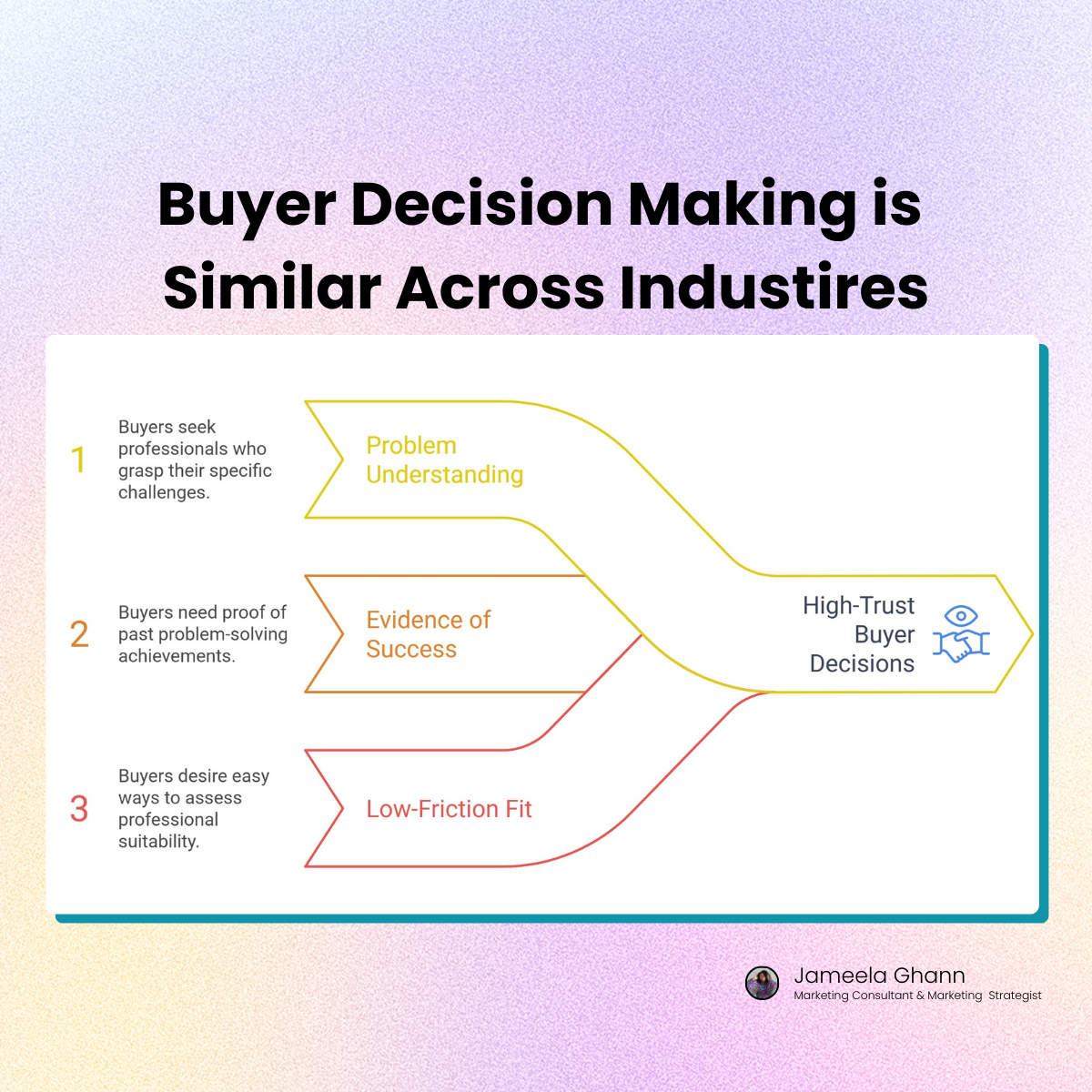
The principle behind the engine works across all of them because it's built around how high-trust buyers in professional services actually make decisions.
They want to see that you understand their specific problem.
They want evidence that you've solved it before.
They want a low-friction way to find out if you're the right fit.
That's true whether you're a litigator in Toronto or a therapist group in Austin.
Where industry differences genuinely matter is tone and content type.
A litigation firm is going to communicate differently on LinkedIn than a business coach.
The engine builds your content rhythm around your specific firm, your specific offer, and your specific buyer, not a generic template dropped on top of whatever you're already doing.
Reason #5: The owner won't be involved enough for this to work.
This one is worth taking seriously because owner involvement does matter.
The engine doesn't require the owner to write posts or spend hours on LinkedIn every week.
What it does require is two specific touchpoints per week:
a short review of incoming applications
and a quick decision on any post-call next steps.
That's usually thirty to forty-five minutes total.
If an owner genuinely cannot find thirty minutes a week for lead generation, that's a signal worth paying attention to, not about the program but about where the firm's priorities actually sit.
What I've seen work well is having an honest conversation upfront about what the commitment actually looks like and what it produces. When owners understand that thirty minutes a week is what connects their operator's work to actual booked calls, most of them find the time.
Reason #6: We don't have content. We don't know what to post."
This one surprises people when I push back on it: you have more content than you think. It just hasn't been organized yet.
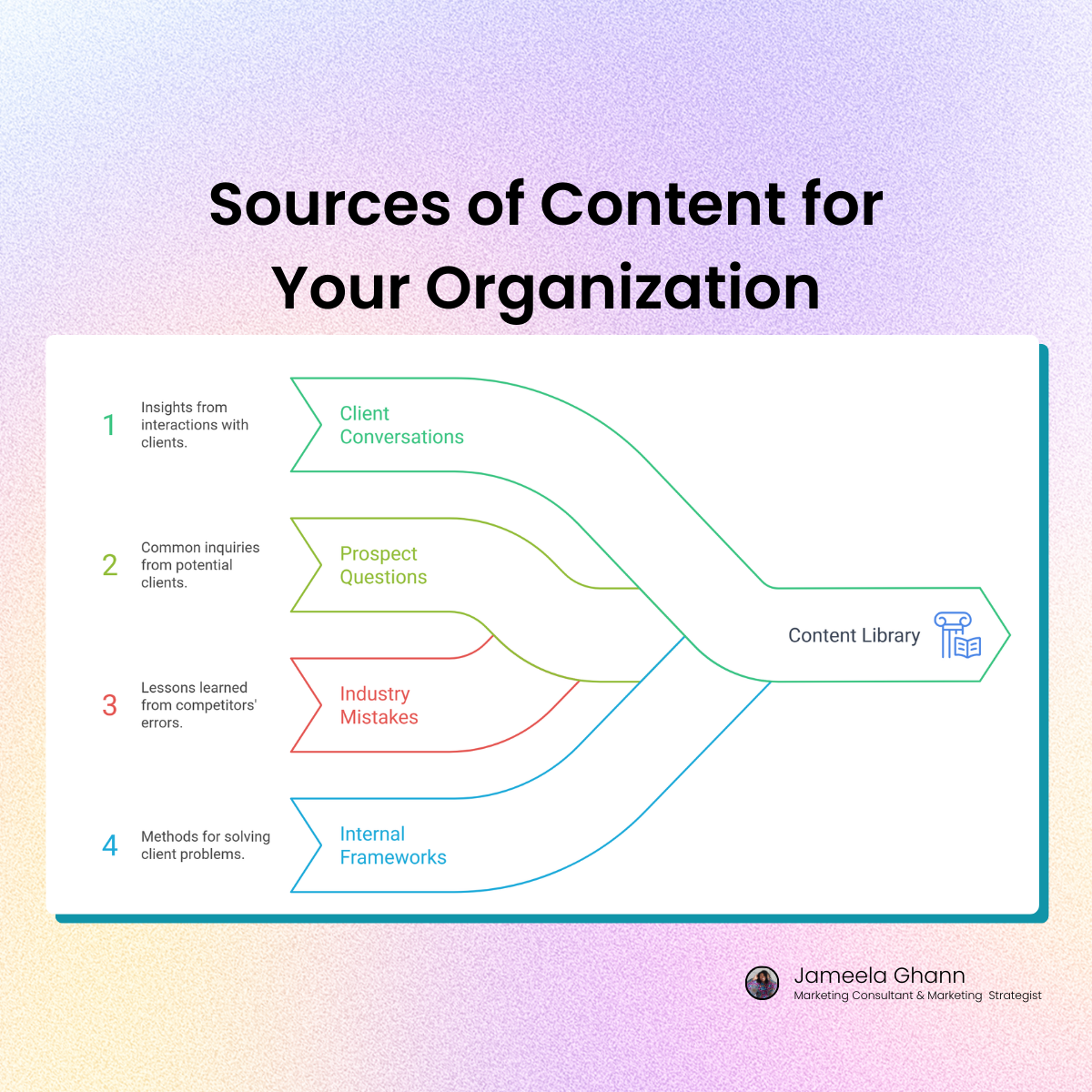
Every client conversation you've had is content.
Every question a prospect asked you on a call is content.
Every mistake you've watched firms in your industry make is content.
Every framework you use internally to solve your clients' problems is content.
The engine's content system starts with an audit of what you already know and believe and turns that into a post library before you write a single new thing from scratch. Most firms come out of that first week with enough material for six to eight weeks of posts.
You don't need to be a writer. You need to be willing to share what you already know.
Reason #7: We're not sure we're ready.
This one is usually the real objection underneath several of the others, and it's worth sitting with for a moment because "not ready" can mean a few different things.
If it means your offer isn't clear yet, that's the first thing the engine addresses in week one.
If it means you don't have an operator in place, that's a real constraint worth solving before you start.
If it means you're not sure the investment makes sense, the scorecard is a good first step because it'll show you exactly where your current system is losing booked calls and give you a clearer picture of what's actually at stake.
If it means you're a little nervous about committing to something new, that's honest and completely normal. Most of the firm owners I've worked with felt that way before they applied. What they'll tell you now is that having a system in place is worth more than waiting until everything felt perfectly ready.
That's why I built the Beyond Referrals LinkedIn Engine
Every objection above has a direct answer inside the program.
The engine is designed for boutique professional service firms that don't have unlimited time, don't have a full marketing team, and may have tried LinkedIn before without the right infrastructure behind it. It installs in eight weeks and produces a system your operator can run without starting from scratch every week.
Week one: offer positioning and qualification flow
Week two: landing page and application-first funnel
Week three: LinkedIn organic content system Week four: tracking and dashboard setup
Weeks five through eight: lead handling, follow-up sequences, LinkedIn ad readiness, and channel replication
If you've been nodding along to any of the objections above, that's useful information. It means you know what's in the way. The question is whether you're ready to remove it.
Two ways to move forward:
Apply to the Beyond Referrals LinkedIn Engine: for boutique professional service firms in the US and Canada who are ready to stop waiting and install a system that produces qualified booked calls from LinkedIn.
Take the Beyond Referrals Scorecard: if you're not sure yet, start here. It's a free five-minute diagnostic that shows you exactly where your LinkedIn-to-call system is breaking down right now.

